

Easter can be a lovely time to relax with family and enjoy a few seasonal treats, but some of the foods and plants we associate with Easter can be very dangerous for dogs.
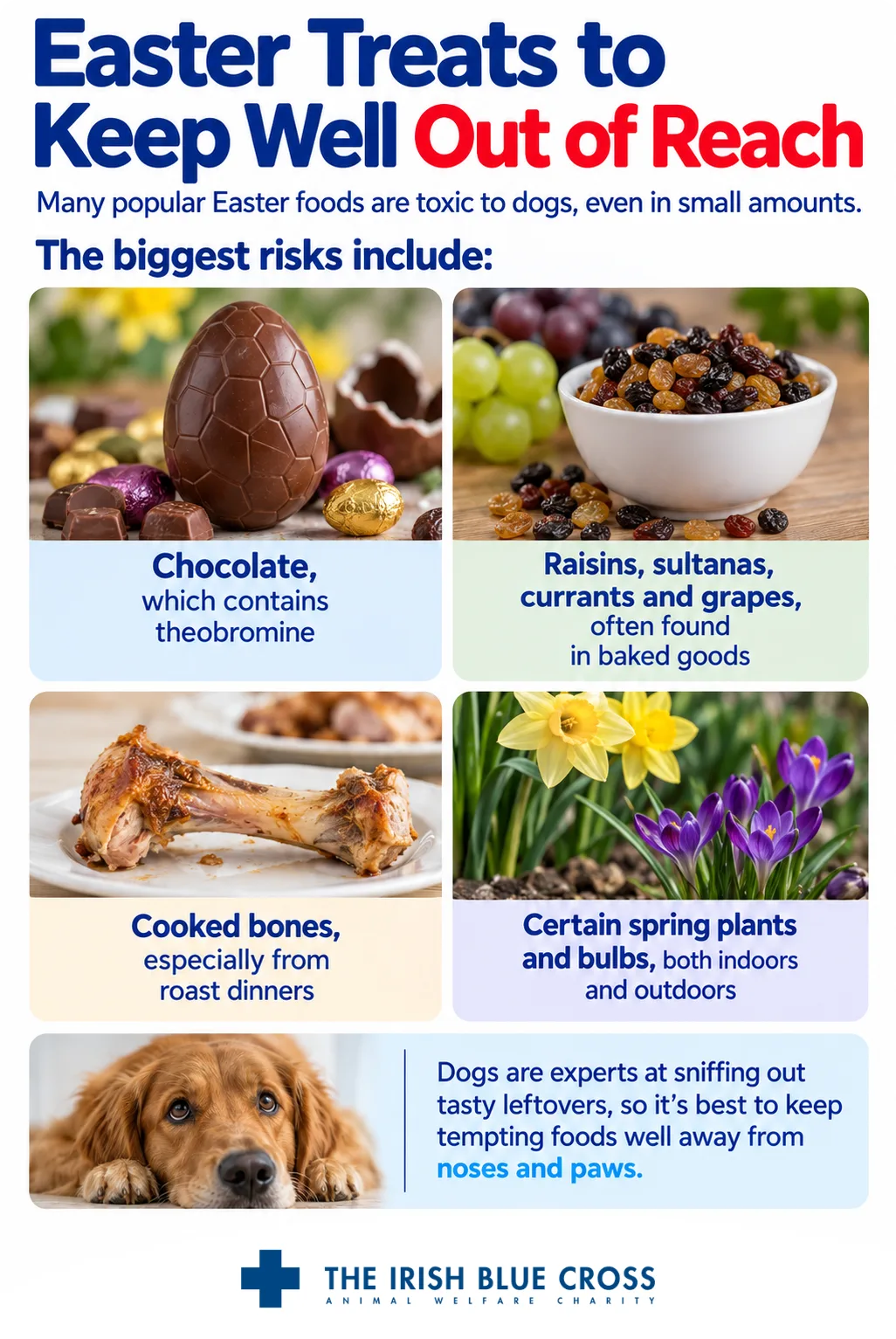
Chocolate Easter eggs may be irresistible to us, but they can be life-threatening for dogs. Chocolate contains theobromine, a substance dogs cannot process safely.
Even a small amount can cause symptoms such as:
Darker chocolate contains higher levels of theobromine, but all chocolate should be avoided. While some white chocolate doesn’t contain much theobromine, its high fat content can still cause stomach upsets or pancreatitis.
If you think your dog has eaten chocolate, contact your vet immediately.
Hot cross buns and other Easter baking often contain raisins, sultanas or currants, all of which are highly toxic to dogs.
These dried fruits can cause sudden kidney failure, and sadly even a small amount can be fatal. There’s no safe dose, and reactions vary widely between dogs.
Sharing ‘just a bite’ is never worth the risk. Keep baked goods securely out of reach and dispose of leftovers carefully.
Spring flowers brighten our homes and gardens, but many common varieties are poisonous to dogs, especially the bulbs.
Dogs that enjoy digging or chewing plants are particularly at risk.
Daffodils and other narcissus
Can cause vomiting, drowsiness, wobbliness and, in severe cases, seizures. Drinking water from a vase containing daffodils can also be harmful.
Tulips
May irritate the mouth and stomach, leading to drooling, vomiting and diarrhoea. More serious signs can include breathing or heart problems.
Hyacinths
Both the flowers and bulbs can cause vomiting, diarrhoea and tremors.
Amaryllis
Often kept indoors; ingestion can lead to stomach pain, vomiting, diarrhoea and shaking.
Other spring plants to watch out for include bluebells, azaleas, foxgloves, crocus and rhododendrons. When in doubt, keep plants well out of reach and supervise dogs closely in gardens and on walks.
Easter meals often mean roast dinners and leftovers can pose a danger to dogs. Cooked bones can splinter or become lodged in the throat or digestive tract, causing choking, blockages or internal injury.
Even raw bones carry risks, as large pieces can break off and cause obstructions.
For your dog’s safety, stick to pet-safe chews and treats, and clear plates and bins promptly after meals.
If a dog has eaten something harmful, symptoms can appear quickly, but not always straight away.
Common warning signs include:
If you think your dog has eaten something they shouldn’t have: