
Helping Your Dog Get Used to Scary Noises
You can help your dog stay calm around frightening sounds by very slowly and very gently teaching them those noises aren’t a threat. This is known as desensitisation and counterconditioning.
If your dog’s fear is extreme, or they panic even at low volumes, please speak to your vet or a certified behaviourist before continuing.
 Choose or Record the Sound
You can use a YouTube video, or your own recording of the noise that worries your dog.
Pick a clear, good-quality clip, avoiding distorted or high-pitched versions.
If recording yourself, stay safe and capture the sound from a distance; you don’t need it to be loud.
Edit or trim the clip so it starts and ends smoothly, as sudden jumps can startle your dog.
Set Up the Environment
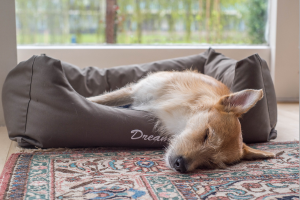
Pick a quiet, familiar room where your dog already feels safe.
Keep the door open so they can leave if they want.
Have tasty treats, a favourite toy, or a comfy bed ready.
 Start with the Sound Very Quiet
Begin at a barely audible level. Watch your dog’s body language closely!
If they ignore the sound or stay relaxed, calmly praise them and offer a treat.
If they show any fear (panting, pacing, hiding, trembling), stop immediately and try again later at a lower volume.

Build Up Gradually
Over days, weeks and months, very slowly increase the volume gradually.
Only move up when your dog stays calm at the current level. Each calm reaction should be rewarded with food, play, or gentle praise.
If your dog reacts fearfully, go back to an easier level for a few sessions.
 Add Positive Experiences
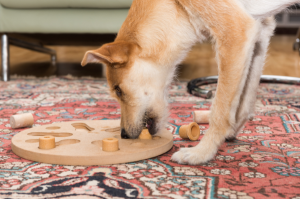
While the sound plays quietly, do something your dog enjoys:
Feeding a meal or treats
Gentle grooming
Calm play or training games
The goal is that your dog starts to think, “When that noise happens, good things happen!”
 Practice in Different Places
Once your dog is comfortable in one room, repeat the same process in two or three other spots around your home.
This helps them generalise calm behaviour no matter where they hear the sound.
 Create a Safe Den for Real Events
Before ‘real’ fireworks or storms, set up a safe space:
In a quiet, room or covered crate
Add familiar bedding and your scent (e.g. worn T-shirt)
Add chews or food puzzles for distraction
Low background music or white noise
 During Real Noise Events
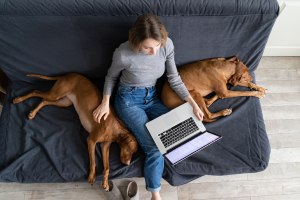
Stay calm and positive. Your behaviour tells your dog that everything’s okay.
Don’t punish your dog or over-comfort them, just calmly reward any relaxed behaviour.
 Keep the Habit Going
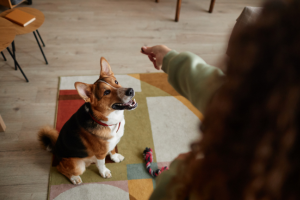
Occasionally replay the sound at an easy level so your dog stays used to it.
If anxiety returns, lower the volume and rebuild slowly.
Consistency is key — short, calm sessions a few times a week work best.
